Dubai move-in inspection checklist: room by room
Updated 2026-10-23
The first hour in a new apartment decides how your deposit conversation goes a year later. Dubai's tenancy law says you must hand the unit back in the condition you received it, apart from ordinary wear and tear (Article 21 of Law No. 26 of 2007). So the condition you received it in needs to be on record. If a crack, stain or broken fitting isn't recorded on move-in day, it is your word against the landlord's at move-out.
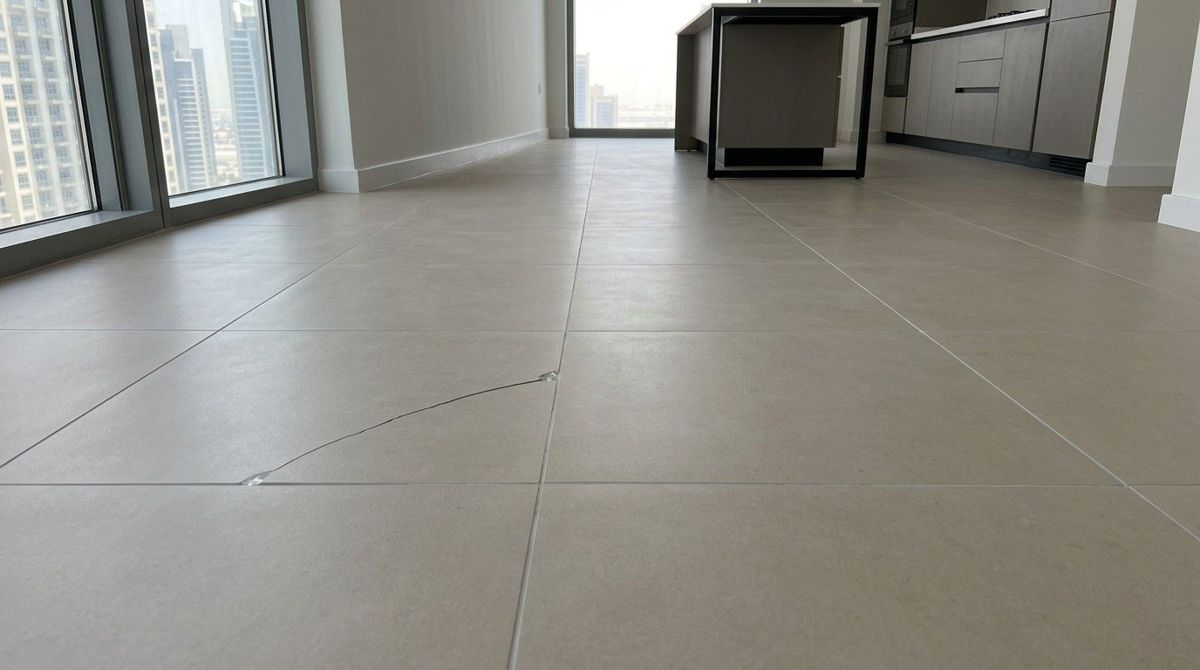
Do the inspection before you move furniture in. Empty rooms show floors, walls and skirting clearly, and nothing hides behind a sofa.
Before you start
- Charge your phone fully and turn on every light in the unit.
- Ask for all keys, access cards, parking cards and remotes, and count them. Note the number in your report.
- Photograph the electricity and water meter readings, and district cooling if your building has it.
- Have your tenancy contract and Ejari number handy, and check the contract for anything it says about the unit's condition, painting or cleaning at move-out.
Kitchen
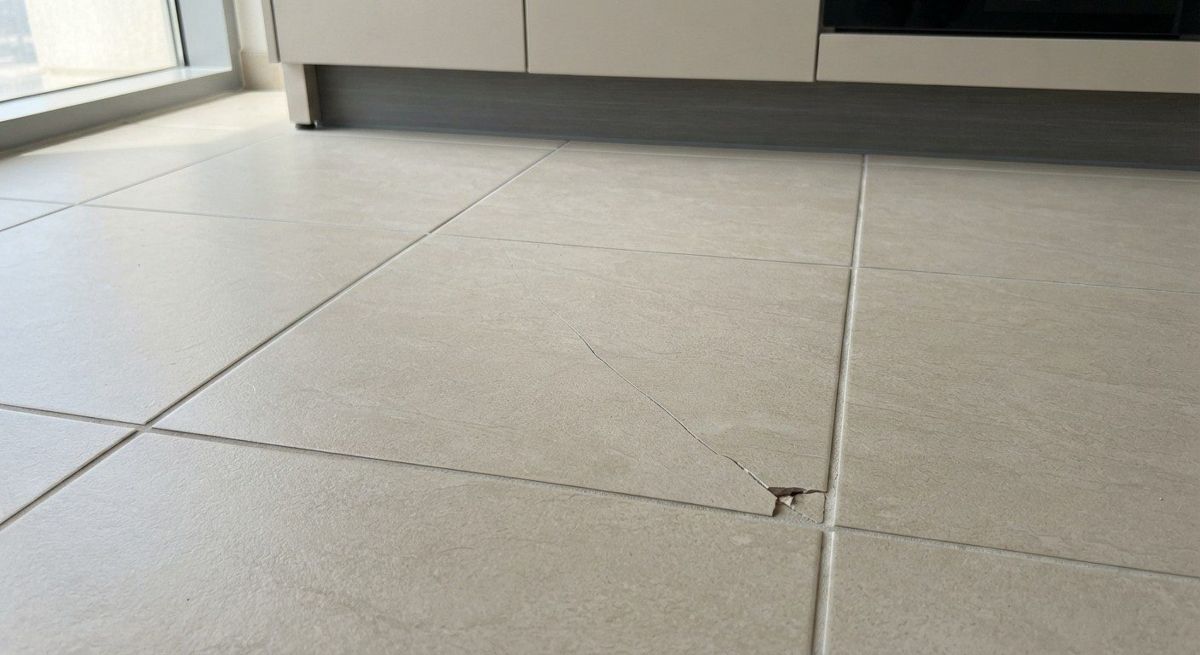
- Floor tiles and grout: cracks, chips, loose or hollow-sounding tiles (tap them).
- Cabinets and drawers: open every one; check hinges, doors that don't close, and water damage under the sink.
- Countertop: burns, chips, stains and the seal along the wall.
- Sink and tap: leaks underneath, water pressure, how fast it drains.
- Appliances that come with the unit (hob, oven, hood, fridge, washing machine): switch each one on and note any that don't work.
- Walls and ceiling: grease marks, paint damage, signs of leaks.
Bathrooms
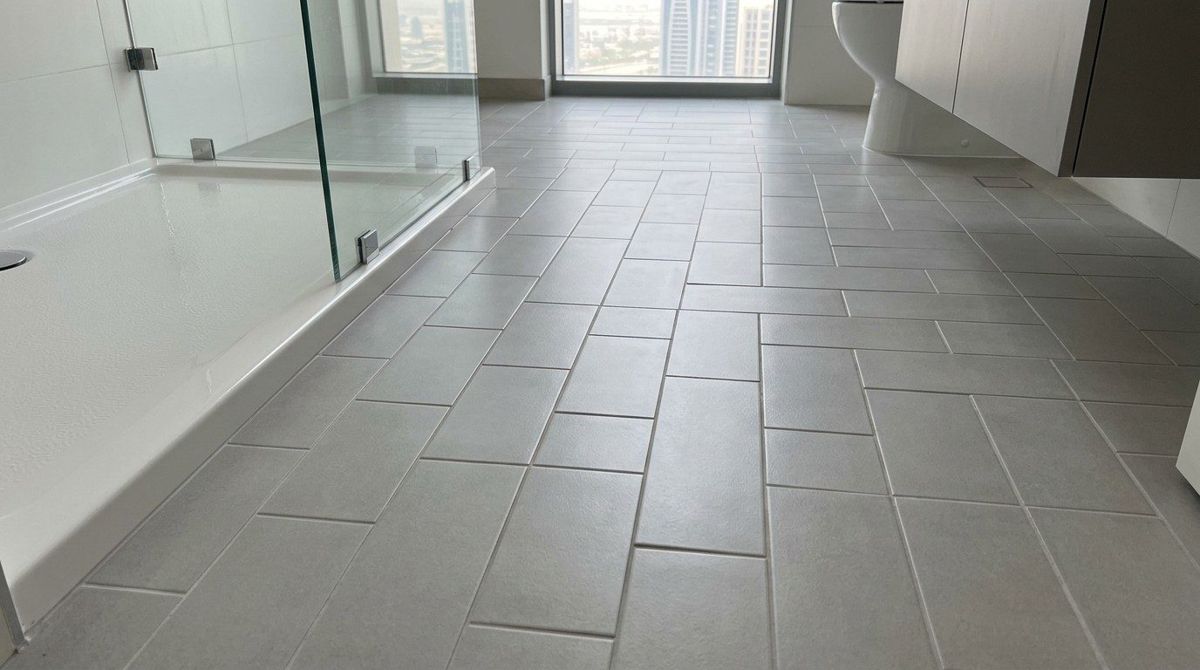
- Shower or bath: run the water; check pressure, hot water and drainage.
- Toilet: flush; check for leaks at the base and that the seat is secure.
- Basin, mirror and cabinet: cracks, rust, broken handles.
- Silicone and grout: mould, gaps, black spots.
- Exhaust fan: switch it on.
- Floor: cracked tiles, and whether water runs to the drain.
Bedrooms and living areas
- Walls: scuffs, holes from old hooks, nail marks, patchy paint touch-ups.
- Floors: scratches on wood or laminate, cracked tiles, carpet stains.
- Wardrobes: doors, rails, shelves, sliding tracks.
- Windows, blinds and curtains: open and close each one; check locks and seals.
- AC units: switch each one on and feel for cold air; look for water marks below indoor units.
- Light switches and sockets: test them and note any that don't work.
Balcony, doors and the rest
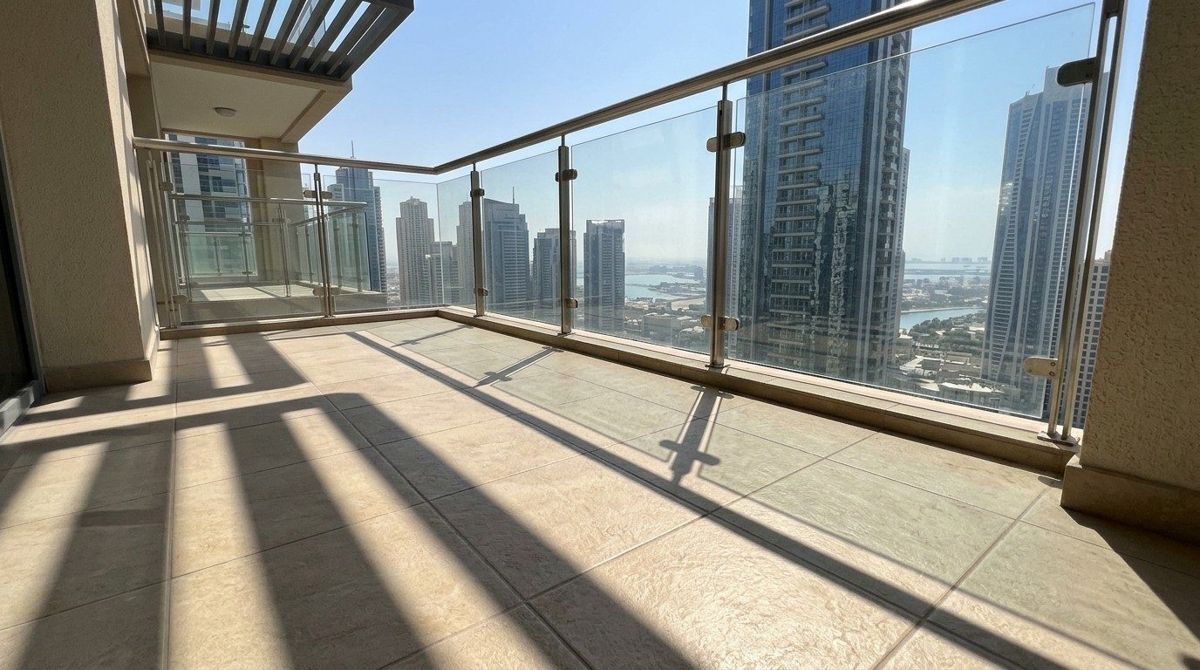
- Balcony floor, railing and sliding door: cracks, rust, a door that sticks or doesn't lock.
- Main door: lock, handle, peephole and door closer.
- Smoke detectors and the intercom.
- Maid's room, laundry or store room if your unit has one.
Report problems in writing
During the tenancy, the landlord is responsible for maintenance and for repairing defects that affect your use of the unit, unless your contract says otherwise (Article 16). Anything broken on day one should go to the landlord or agent in writing within the first days, with photos, so it is fixed and so there is a record that it was already there.
Record it properly
A list on paper helps you remember; a dated photo of each item is what shows it. Take a wide photo of every room and a close-up of anything damaged, write a short note ("crack near the fridge, about 10 cm"), and keep it together in one report. Send a copy to your landlord or agent and keep your own.
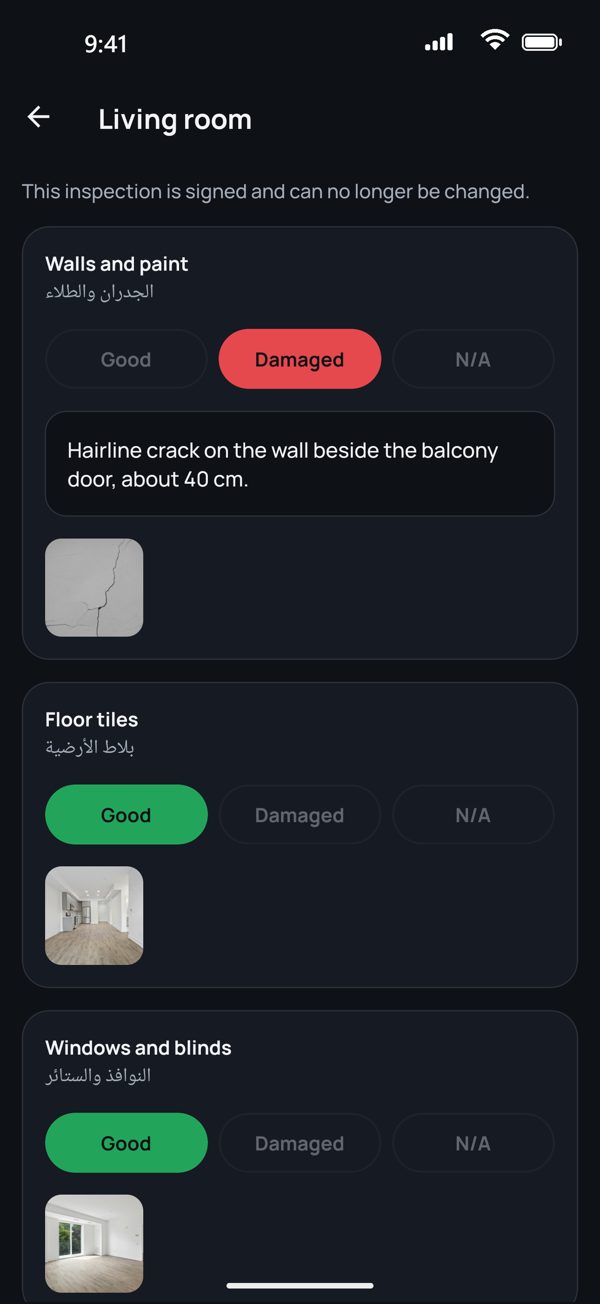
AptProof does this for you: pick your building and unit type, and the camera walks you through each item. You mark it Good or Damaged, take a photo and add a note. When you sign, the report is fingerprinted, so any later change shows.
This guide is general information, not legal advice. Your tenancy contract can add terms of its own, so read it alongside this checklist.